International Family Guide
A Family Guide to Little Knights in Ningxia: Desert Riding, Camp Life and August Stargazing
A practical guide for international families considering Little Knights in Ningxia, with program fit, parent options, August 2026 dates, desert weather, lodging, packing and realistic stargazing guidance.
Updated 2026-08-05 by Kids Rally Camp Editorial Team
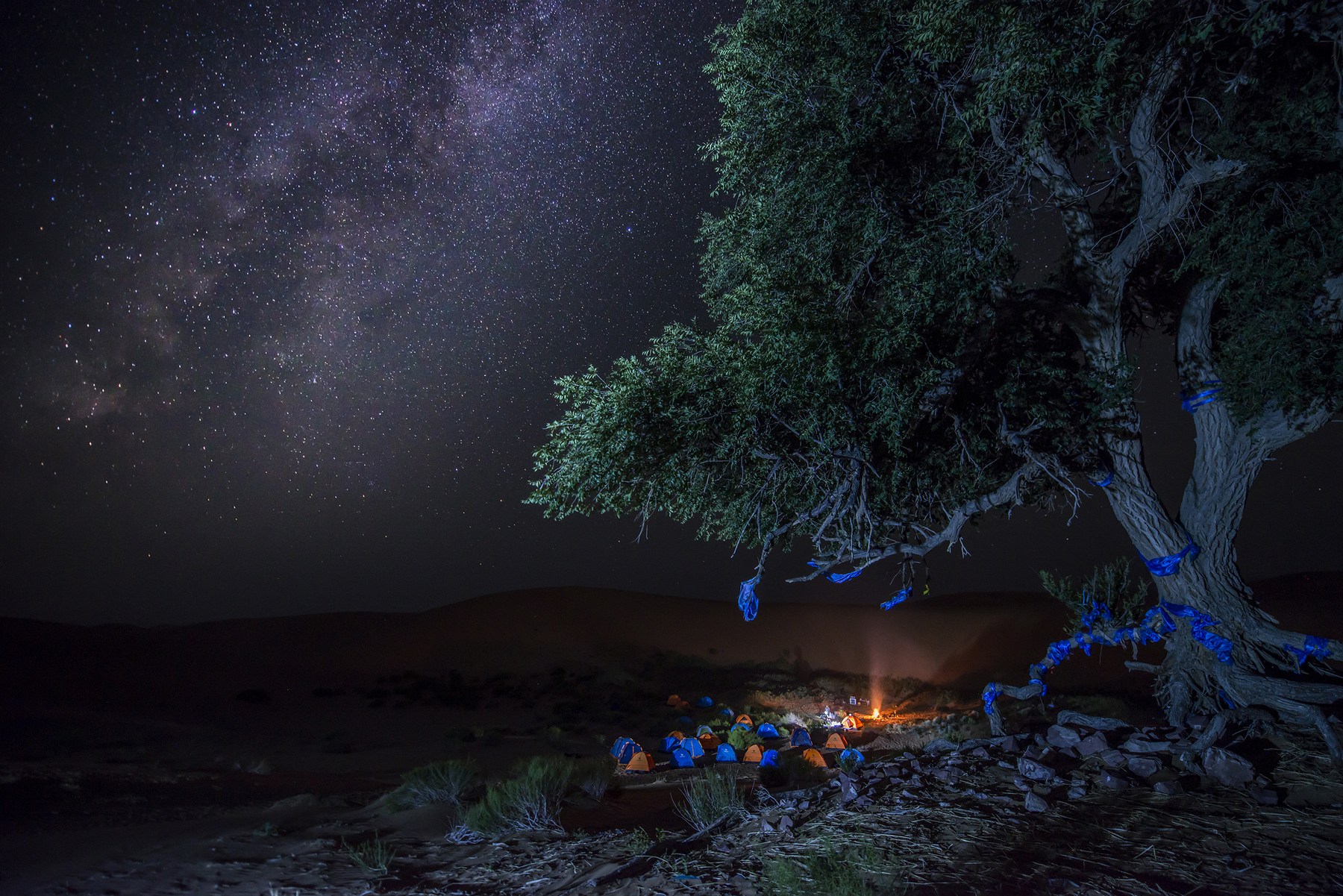
For an international family, “summer camp in China” can mean many things. Little Knights is unusually specific: children learn off-road riding and outdoor skills at a desert-edge base in Ningxia, then experience camp routines that may include field study, route work, reflection, a bonfire and, when conditions allow, a genuinely dark night sky.
That combination is compelling, but the practical questions matter more than the photographs. Which program fits a beginner? Can a parent stay? Is August unbearably hot? Which session actually overlaps the low-moon stargazing window? This guide answers those questions without treating a desert camp as a theme park or promising a perfect sky.
Start with the location
The published address is Silk Road Riders Tengger Explorer Base, Changliushui Village, Shapotou District, Zhongwei, Ningxia, China. It is an outdoor education and riding base near desert terrain, not a city-centre resort.
That distinction shapes the experience. Open horizons, relatively low light pollution and dry terrain support riding and astronomy, while distance, wind and changing weather require more preparation. International families should ask the enrollment team for the current check-in point, transfer window and travel instructions before buying air or rail tickets. English-language staffing, airport or station transfers, visa support and international payment methods should not be assumed unless they are confirmed in writing for the session.
A camp day follows the terrain, not a hotel timetable
The exact order changes with weather, route conditions, group readiness and safety decisions, but a typical rhythm is easy to understand.
- Early morning: wake-up, mobility, breakfast and personal organization while the desert air is cooler.
- Morning learning: equipment checks, riding posture and controls, braking, steering or a supervised skills module.
- Midday: lunch, hydration and a substantial rest period away from the strongest heat.
- Afternoon: progressive riding, route tasks, nature study, field skills or survival practice, adjusted to the group.
- Evening: dinner, equipment care, team reflection and camp culture. Astronomy is scheduled only when the sky, sleep plan and operating conditions make it appropriate.
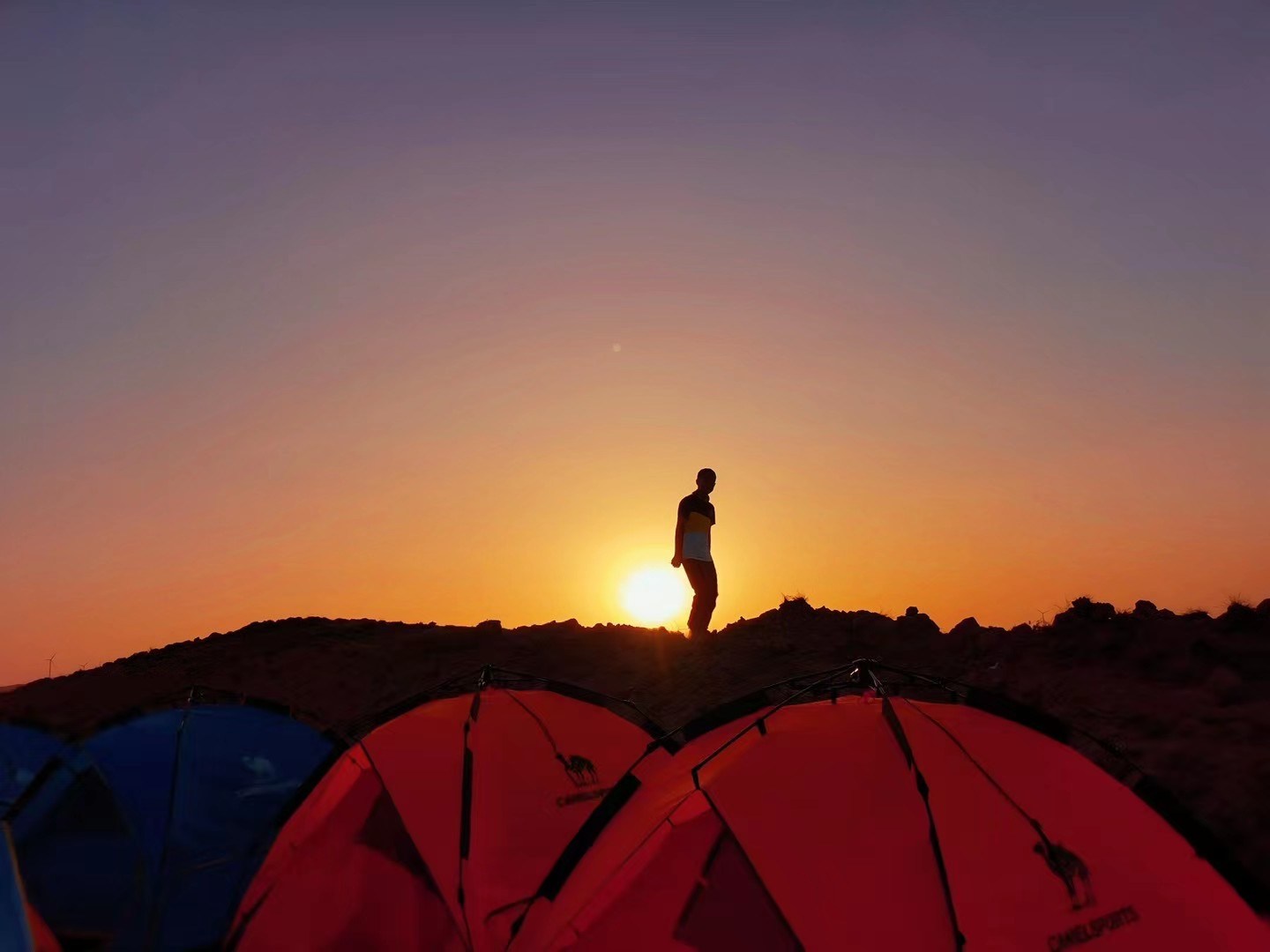
Morning light over a previous camp. Daily timing is adjusted for weather, route and safety.
This is important for expectations: stargazing is one memorable part of the setting, not an excuse to keep children awake after every demanding riding day. Likewise, a published route distance is a program target, not permission to push through fatigue or deteriorating weather.
Choose the pace that matches the child
For a young beginner, the natural entry point is Explorer Camp. The published format is 6 days and 5 nights for ages 6–12, with zero-base teaching, five nature exploration or survival lessons, five basic riding lessons and a selected route of approximately 100 kilometres. The program describes about four to six activity hours per day and a session limit of 21 participants. Its published standard price is RMB 12,800 per person.
Explorer Camp is designed around curiosity and first competence: how to wear and check equipment, use controls, manage pace, observe terrain, communicate and take part in camp life. It is not necessary for a child to arrive already knowing how to ride.
The Training Camp is a different commitment. It is published for ages 10+ with a riding foundation or previous camp experience, lasts 10 days and 9 nights, and includes intermediate or advanced riding modules alongside outdoor learning. Its route target is approximately 200 kilometres across multiple settings, with about six to eight activity hours per day. The session limit is 21 and the published standard price is RMB 19,800 per person.
Those numbers should guide a family conversation, not replace an assessment. Age, height, confidence, physical condition, emotional readiness and prior riding all matter. The camp should make the final placement decision. Published prices, inclusions and availability also need final confirmation before payment.
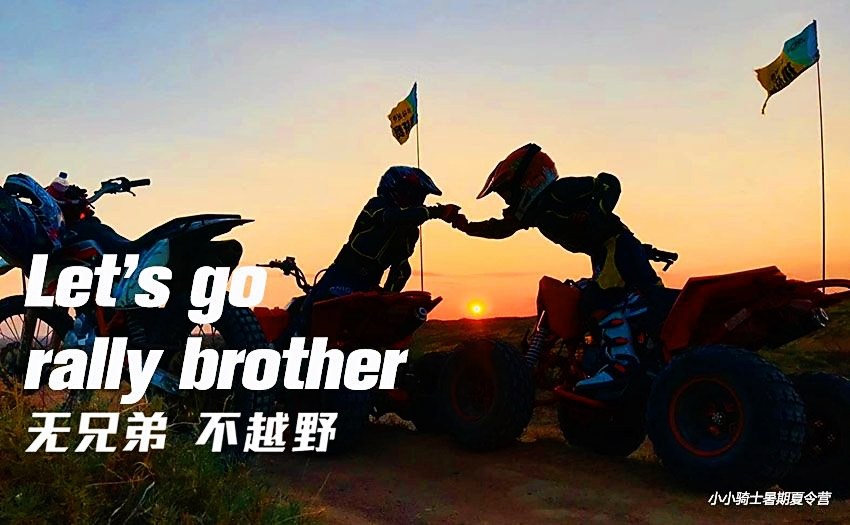
Progressive instruction, protective equipment, supervision and route management are essential parts of the riding environment.
Off-road riding is not risk-free. Families should review the camp’s safety approach, disclose relevant health information and ask how vehicle assignment, protective equipment, speed control, coach supervision, route management, weather decisions and emergency procedures work for the chosen session.
Parents can participate, but the role is program-specific
Explorer Camp publishes a parent-child option. Families with children aged 6–8 may apply for a companion version, with final suitability confirmed during enrollment. This can work well when a younger child is ready for the learning experience but still needs a familiar adult nearby.
Training Camp may consider parent-child participation, but it does not publish a simple “parent comes only to accompany” model. A parent should therefore confirm whether they are an active participant, where they sleep, which activities they join, what fee applies and when the child is expected to operate independently.
For international families, parent presence does not automatically solve the language question. Safety briefings, waivers, emergency communication and medical information need to be understood by both the child and adult. Ask specifically which languages will be available in the actual session.
The August 2026 dates are not equal for stargazing
The strongest low-moon overlap occurs in mid-August. The U.S. Naval Observatory’s 2026 phase table places the new moon at 01:37 Beijing time on August 13. Moon illumination is very low from roughly August 10–14, making late August 12 through the pre-dawn hours of August 13 the core local dark-sky window. The annual Perseid meteor period adds interest, but predicted shower maxima and local darkness do not perfectly coincide in China, and no responsible operator can promise an hourly meteor count.
Here is what that means for the published camp calendar:
- Explorer Camp, August 12–17: directly covers the core August 12 night to August 13 dawn window.
- Training Camp, August 13–22: starts after the core night has begun; its first night, August 13–14, still has very low moonlight and may be attractive if weather and the operating plan allow.
- Explorer Camp, August 19–24: does not cover the core new-moon window. General stargazing may still be possible, but it should not be marketed as the same low-moon opportunity.
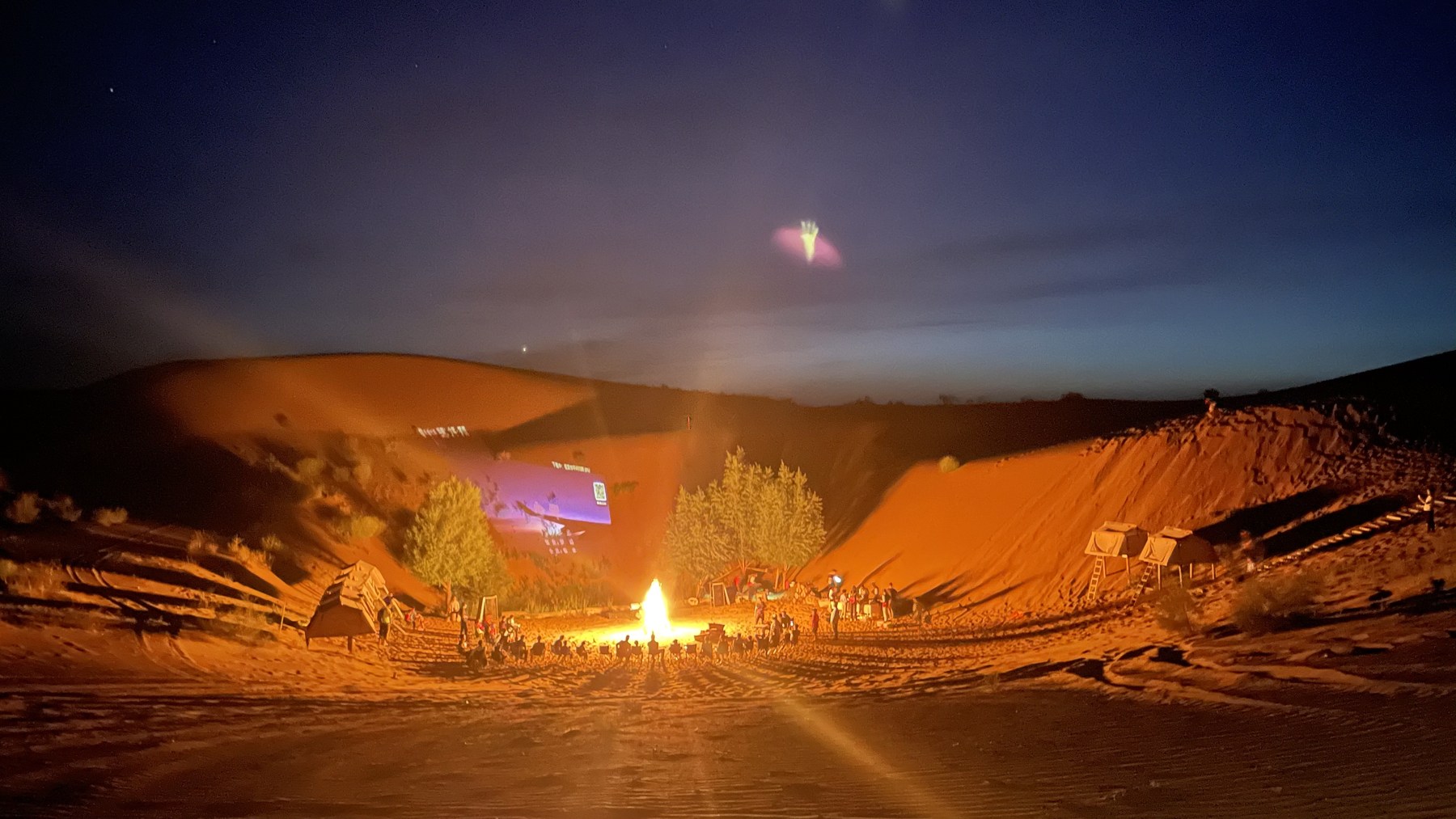
A camp evening may move from group activity to quiet sky observation, depending on the night’s plan.
Cloud, haze, wind, dust, short rain, sleep needs and field safety can cancel or shorten observing. Camp photographs are also often made with long exposures: they can reveal fainter stars, colour and Milky Way structure that the unaided eye sees less strongly. Families should treat the images as records of the location’s potential, not as a guaranteed naked-eye view.
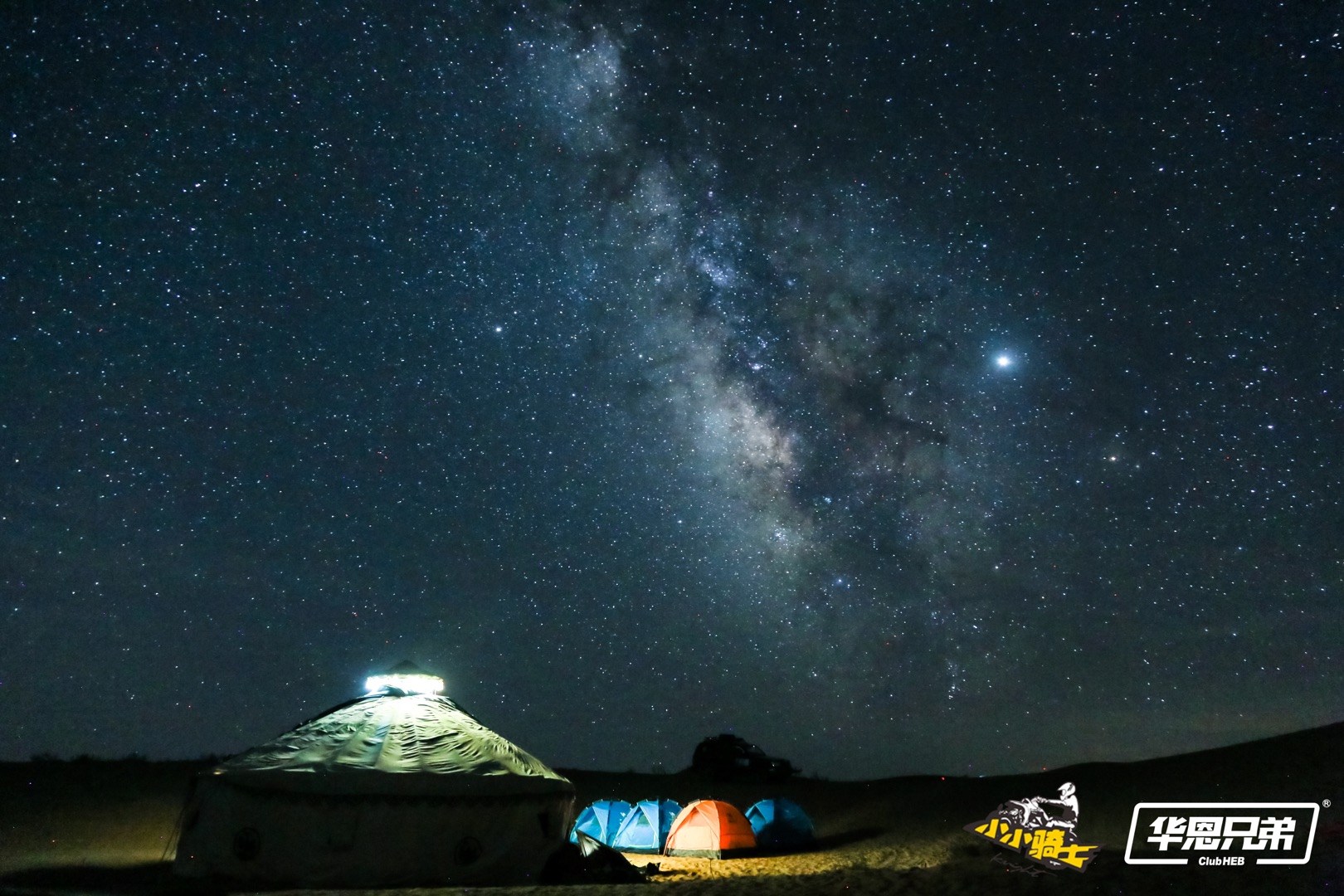
Long-exposure photography can show more colour and faint structure than the naked eye.
August is warm by day and surprisingly cool at night
The regional August climate reference published by China Weather for Shapotou is an average daily maximum of about 28.2°C and an average minimum of about 15.7°C. Those figures are climate averages, not a forecast for the base or a promise of “cool weather.” Strong sun, a large day–night temperature swing, wind and occasional convective weather can all occur. Check a current local forecast close to departure and follow the camp’s packing update.
Published materials describe four-person camp-learning accommodation for children. Adult arrangements may use a Northwest-style homestay room or a desert tent, depending on the program and assignment. Do not assume that every night is tent camping—or that a desert tent has the facilities of a hotel. Confirm room occupancy, bathroom and air-conditioning arrangements, bedding, parent-child room rules and any special sleep needs before enrollment.
Pack for sun, wind and a colder final hour
A practical bag should include:
- passport or required identification, emergency contacts, health and allergy information, and enough prescribed medication in original packaging;
- breathable long sleeves, quick-drying layers, long trousers, spare socks and closed-toe camp shoes;
- a warm wind-resistant outer layer for pre-dawn or late evening;
- a sun hat, sunglasses, high-SPF sunscreen, lip balm and a reusable water bottle;
- personal hygiene items and a small daypack;
- a headlamp with a red-light mode, only if the camp approves it for astronomy and night movement;
- a China-compatible plug adapter and a realistic communication plan for the parent or guardian.
Ask what helmet, goggles, body protection and other riding equipment are supplied before buying technical gear. Also confirm laundry, luggage limits, phone policy, dietary needs, medication storage and the exact scope of camp insurance.
Before you enroll
Begin with the 2026 summer camp calendar, then read the full Explorer Camp or Training Camp page. International families should also review the international family guide, gear list and frequently asked questions.
When you contact the enrollment team, name the intended session and ask for one written confirmation covering final price and inclusions, remaining places, child suitability, parent role, arrival and transfer instructions, language support, accommodation, health forms, insurance, payment, and refund or transfer terms. If astronomy is important, ask whether the August 12–13 operating plan includes a weather-permitting observation period—but keep a flexible expectation.
Ningxia can offer a rare sequence: dawn over the sand, a day learning to ride with judgment, dinner with a team and a night sky far darker than most children see at home. The value lies in experiencing that whole day responsibly, not in guaranteeing a photograph or chasing a number of meteors.